

They are all around and it's interesting for the kids to take a closer look at them, in English too.
I started with the famous, but not environmentally conscious, bumble bee song and then we played that phonic game Bees and Flowers I told you about several posts ago. This time I drew daisies, tulips and sunflowers to make sure my students would learn flowers' names.
 At the beginning the kids were using the more general word flower they already knew and I had to explain them that flowers are like children: each one has a different name.
After buzzing around for a while I introduced vocabulary about bugs like, spiders, ladybugs, snails, bees, dragonflies, caterpillars and butterflies, using flashcard games.
To help them remember a couple of the names in the list above you can use these two songs: One about ladybugs and the other about the spider and… prepositions of place!
This second one is not only catchy but also really useful.
To make the most of it and also review numbers from 1 to 20 we played a card game you'll find here on page 13 and 14. Instead of the trowel card my students were hiding and looking for… a spider!

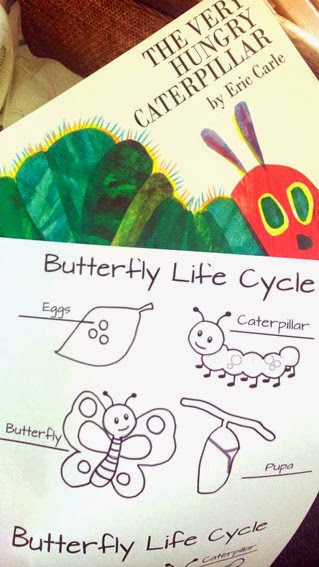
Finally we read The Very Hungry Caterpillar. Actually, we read it again because I had never realized before that it also shows the butterfly life cycle.
An ESL teacher isn't expected to teach such scientific facts, so I usually use that same book to teach food, days of the week, numbers. It has been surprising to discover a new use of the story after owing it for 6 years.
Here you can download a cute picture of a butterfly life cycle to cut and use as a puzzle.
Next post… flowers and plants!
Meanwhile enjoy the springtime!
----------------------------------------------------------------------------------------------------------------------------


Thanks for sharing your knowledge. I'll definitely be coming back for more articles. Madhur Day Panel Chart
ReplyDelete